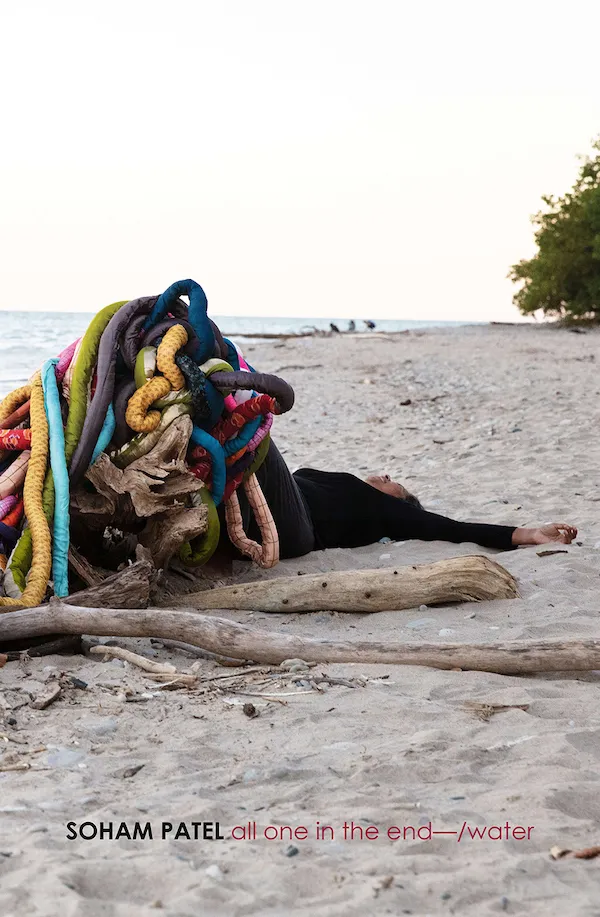
by David Campos
from the bar we exited. I ask if I can kiss
her
and wonder what door this will open.
Soon, she'll be gone for two weeks,
A Collection of the Poetry and Art of Cycling
- after lucille clifton
|
Maybe it was the bicycle. The way her hips
rose up and up - as if directed straight to heaven -
Like a Venus. And a banker's daughter - true.
Real original, this girl - a bicycle, a camera,
other newfangled tools. I sent her bolts
of cloth, overalls, and boots - anything to make her squint
her eyes and glance one day towards me - me: Fred
Wiggins of Wiggins bazaar - 123 Commercial Street.
More of a back-up boyfriend, for someone like Myra
her family would say. Everyone knew she was in love
with her own life: bareback rides, opera singing,
and the New York artiste nights. But I expected
to live a little, too. And so if there were men
of Salem, Toppenish, Seattle, lovely and rich -
who snickered at our last-season suits
and sequined gowns, who hinted not infrequently -
that a husband should not be so happy
packing picture frames and mounting
photographs. Christ. They knew nothing.
Early summer evenings, the city kids would ride their bikes down his
street
no-handed, leaning back in their seats, and bump over the curb
of the empty Red Cross parking lot next door where Joe's car was
parked, and
John's white Honda, broken and unregistered...everything blooming,
that darkening in the trees before the sky goes dark: the sweetness of the
lilacs
and the grass smell...
And the sound on the front porch steps was wooden and hollow,
and up the narrow stairway stuffy, and dim, and the upper door maybe a little
open - and into the hall and left into his room: someone might be sitting
there
reading, or sometimes only him, sleeping,
or lying awake, his face turned toward the door,
and he would raise his hand...
And the woman who lived below there played the piano. She was a
teacher, and
sometimes we'd hear that stumbling repetition people make when they're
learning a new song, and sometimes she'd play alone - she'd left a note
in his mailbox saying she would play softly for him. And those evenings,
when the sky was sunless but not yet dark, and the birdsong grew loud
in the trees,
just after supper, when the kids wheeled by silently
or quietly talking from their bikes, when the daylilies closed up
alongside the house,
music would sometimes drift up through the floorboards,
and he might doze or wake a little or sleep,
and whoever was with him might lean back in the chair beside the bed
and not know it was Chopin,
but something soft and pretty -maybe not even hear it,
not really, until it stopped
- the way you know a scent from a flowering tree once you've passed it.
I wiped out on my bike yesterday. My ex was with me and helped me up and it was romantic for a moment in the way romcoms are romantic when the love interest leaps to the rescue in the wounded aftermath and gently dabs their lover's lip and fixes them up with bandaids and kisses: oh, this might sting a little. Except that this is real life and he spills the hydrogen peroxide all over the couch as he tries to bathe my bloody elbow and my torn up knee and I'm crying but not in a sexy way and we're not lovers anymore but still there's love. Not the fireworks kind, but the familiar and sweaty and honest type that carries you home and slaps a bag of frozen broccoli on your bruised thigh and accidentally calls you baby again - as if you might not notice. As if your heart doesn't thump like the tail of an old hound at the sound of her name.
by Kim Stafford
You guys are all dressed up! Is this your
dinner table? It's really big. Okay, so--
I was down in the woods near my house
minding my own business, but this voice
out of nowhere starts talking, talking to me,
starts teaching me this big word: "non-neg...
non-negosh...negosh...non-negotiable."
That's it. This change that's coming is
non-negotiable. That's the whole thing
I'm supposed to tell you guys. The voice
said you don't seem to know that. Then it
went away, and I stood there in the trees.
So that's it, okay? The big change is just
non-negotiable. Now can I get on my bike
and go home? My mom will kill me if I'm late.
from As the Sky Begins to Change
Saturday mornings were science fiction—
That is, on that day anything was possible.
We didn’t have to go to the movies for that,
Though when we did, we were introduced to ourselves
More than anything. Ourselves in rockets,
Ourselves taking chances, ourselves speaking to the universe.
Outside of the movies, we were still in them—
Our bikes were our rockets, our submarines, our jets.
But mostly, and first, our bikes were our horses
In this childhood West, a loyal, red Western Flyer
Taking me everywhere, up and down, fast and slow.
Only later did I understand it was my own legs
That did it all. My own legs and my arms to steer,
My own small, mighty lungs to shout—
A shout that would later become a song.
When they weren’t horses, when my legs were tired,
When the shouts calmed down into just talking,
We bike-riders would sit, and find in that talking
The gold we had been looking for, though we didn’t know it.
The gold was made of plans for Saturdays still to come—
We each had different ideas, but we all had them,
Speaking them confidently as if we were lions,
Deep-voiced and sure even in that quietude.
What would happen next was far away,
But even as we rested, something in us knew
We would catch the future no matter how fast it ran.
“This is a simple testament to our childhood and adult imaginations both, looking at how time allows us to see the same thing in more than one way. I grew up on the border, literally, but it was never one thing. This poem helps me to understand that the border wasn’t simply about geography, but about the border between today and tomorrow; between what we were doing and what we were going to be doing; the certainty of that hopeful and creative and powerful sensibility—‘I’ was in harmony with the bravado of ‘I am.’”
—Alberto RĂos
At breakfast I feed him my dreams as I arrange
his pills on the table. He is best in the morning,
when his wings lift from the labyrinth,
when he shaves, has an espresso.
Father, I dreamt last night that I was riding
a bicycle down a road in the country,
stones in my pockets to toss at the stray dogs.
I was afraid. The road continued into a fallen
green as the negligent moon took over the sky.
I could hear the dogs off in the distance
as I pedaled towards a clearing where one deer
stood; its proud antlers swayed in the silver
& I was silent. Silent as I've ever been. Calm.
Then you. You sprinted from the tree line:
openmouthed, unshaven, & took
the deer by its hind legs to drink your fill.
I wanted to run. I did. but ran toward you.
|
|
The curtains sail into the room with the memory of presence behind them
while my father waits in the dark taking apart what is left of his former selves,
like a pianist, drunk at the keys, playing the same four notes,
letting them ring in the pedals until they haul themselves back into sleep.
He says, I am shadow
& the thief at the seam of his spine slides through the blades of his shoulders,
hollows the blood, while the dopamine cheapens
like a dollar-store lighter & suddenly, another streak in his Depends emerges as proof.
This too in Arcadia--
the meadow in twilight's last streak of red before he enters the tree line,
which is already waiting, its small footpaths like paintings held in storage,
their deep palettes so close they strangle to a labyrinth
laced on an MRI-black. The wolf there tears at his tendons,
leaves him always in a fog, & if he emerges it is only to watch but not to enter
the burning city & self he still loves.
He says, I am the smoke's mascara
& I know he is imagining the Bronx he can never return to,
where his youth is held in the thin frame of a bicycle
as it cuts through a billow of smoke. The city burned each night & each morning
he rose to ride through the rubble. The what was,
the father I hold onto to care for his shadow never gets old--
he is kind & clear. He rises each morning & lifts me onto the back of his bicycle,
he pedals while I glide above the city in wonder.
by Patrick Phillips | |
|
I’m on an errand to find my grandpa. I’m ten
and finding freedom in a sanctioned outing
on my bike through the streets of Clovis, CA.
I roll past Silver’s house and peek into the backyard
of broke drunks holding paper bags around
a barrel fire. One who just came back
from taking a leak is seasoning some carne
they bought with the tallboys across the street
at Numero Uno market. The door chimes when
I walk in and see Artemio’s white mane. His mustache
stretches from his nostrils to his sideburns
and up into his waxed pomp of hair.
My grandma says I’m not supposed to talk to him,
but he always asks how she’s doing.
I don’t see my grandpa anyplace. Art says
he’s around somewhere. I go to Ruby’s
next door. I’m not allowed, but I look in.
I’m hit with a gust of cigarettes and Bud Light.
Half a dozen heads turn my direction. No dice.
I ride down Pollasky with feet out each way.
I swerve left and right, free, for once. I am this
far from the shouting distance of my grandma.
I take to the alley just for kicks and pop a wheelie
behind the appliance shop. I pull up behind Henry’s,
knowing grandpa’s in there. A few other grandpas too.
I don’t knock. I stay on my bike. I realize
I’m not ready to go home and like most men
in this town, grandpa doesn’t want to be found.
I keep riding. I go North toward what’s left
of the railroad tracks. There’s a grey cloud
moving across the sky and I imagine I’m
chasing it, I’m right behind it. I keep riding
until it’s all oleanders and stacked railroad ties.
I never thought I could go this far. I get off
the seat and stand. I glide next to a forgotten
caboose. I imagine I’m the howling train now.
My tires kick dust as they crunch over the dry dry dirt.
| by Tammy Melody Gomez | |
|
WHICH THE PHRASE red-handed, meaning caught in the act, meaning smeared with guilt, out out damned spot, is a bastardization of, given as purple-handed is the result, this time of year, of harvesting mulberries, which Aesop's ant might do with freezer bags or Tupperware, but, being sometimes a grasshopper, I do with my mouth, for that is one of the ways I adore the world, camped out like this beneath my favorite mulberry on cemetery road, aka Elm Street, aka, as of today, Mulberry Street, the wheel of my bike still spinning, as the pendulous black berries almost drop into my hands, smearing them purple and sweet, guilty as charged.
by Ross Gay
From The Book of Delights
This book of "essayettes" - sometimes prose-poems - was chosen as the 2021 Everybody Reads selection by the Multnomah County Library, and will be made available for free to all patrons beginning in early February, 2021.
We hunt here, I was shown death
at the age of seven, something dead
in my uncle’s hands.
I touched the belly of the black snake
felt its body a muscle tense.
I know nothing
of the baby birds cut
from the sour smell of its stomach,
just as I know nothing
of the sister and brother I watched cut
from the back seat of a flipped over car,
their own little cave.
My uncle tossed the thin-winged birds
into the air; lost
in the overgrown wood forever.
They never flew, never rode
their Huffy bikes from street end
to street end.
Never raced each other,
never turned a bike into a motorcycle
with an empty orange soda can. The black snake tail
will swirl until the sun goes down,
until the devil comes to get it.
I began to pray
for a new skin for my mother.
Once I cold name
all the new things.
Mutt puppies, new heads of lettuce,
my uncle’s new car, new red heart.
From River Hymns